Managing cash flow during inflation is one of the toughest challenges any business faces, whether it’s a small local shop or a growing company. Prices rise, interest rates fluctuate, and our purchasing power steadily erodes as the inflation rate moves higher. In this shifting economic environment, cash flow management is not just a finance exercise; it becomes a core survival skill. When we understand how inflation affects our real costs, cash inflows, and cash outflows, we give our business the resilience it needs to navigate economic uncertainty with greater confidence and control.
Understanding How Inflation Impacts Cash Flow and Purchasing Power
Inflation affects nearly every part of our operations, and its impact is evident in our financial statements. As the Consumer Price Index and Producer Price Index climb, we see immediate pressure on raw material costs, wages, utilities, logistics, and other variable costs that drive the cost of production. At the same time, global economic conditions—including post-pandemic demand, a tight labour market, and ongoing geopolitical turmoil—can trigger further supply chain disruptions and raise transportation expenses. If we do not adjust our pricing strategies and operations, our margins shrink, and our cash flow leaks grow, even if top-line revenue looks stable.
Inflation also reduces the real value of money, narrowing our purchasing power over time. Cash balances held in nominal values today will buy less inventory or services in the future if the inflation rate remains high. Meanwhile, central banks such as the Federal Reserve may respond with interest rate hikes, pushing up borrowing costs and tightening debt covenants in existing loan agreements. In such inflationary times, we must balance holding sufficient cash reserves for safety with using those funds strategically to reduce expensive debt, invest in efficiency, and maintain flexibility. Understanding formulas like the Fisher formula helps us distinguish between real cost of capital and nominal cost of capital, which is crucial when evaluating long-term investments.
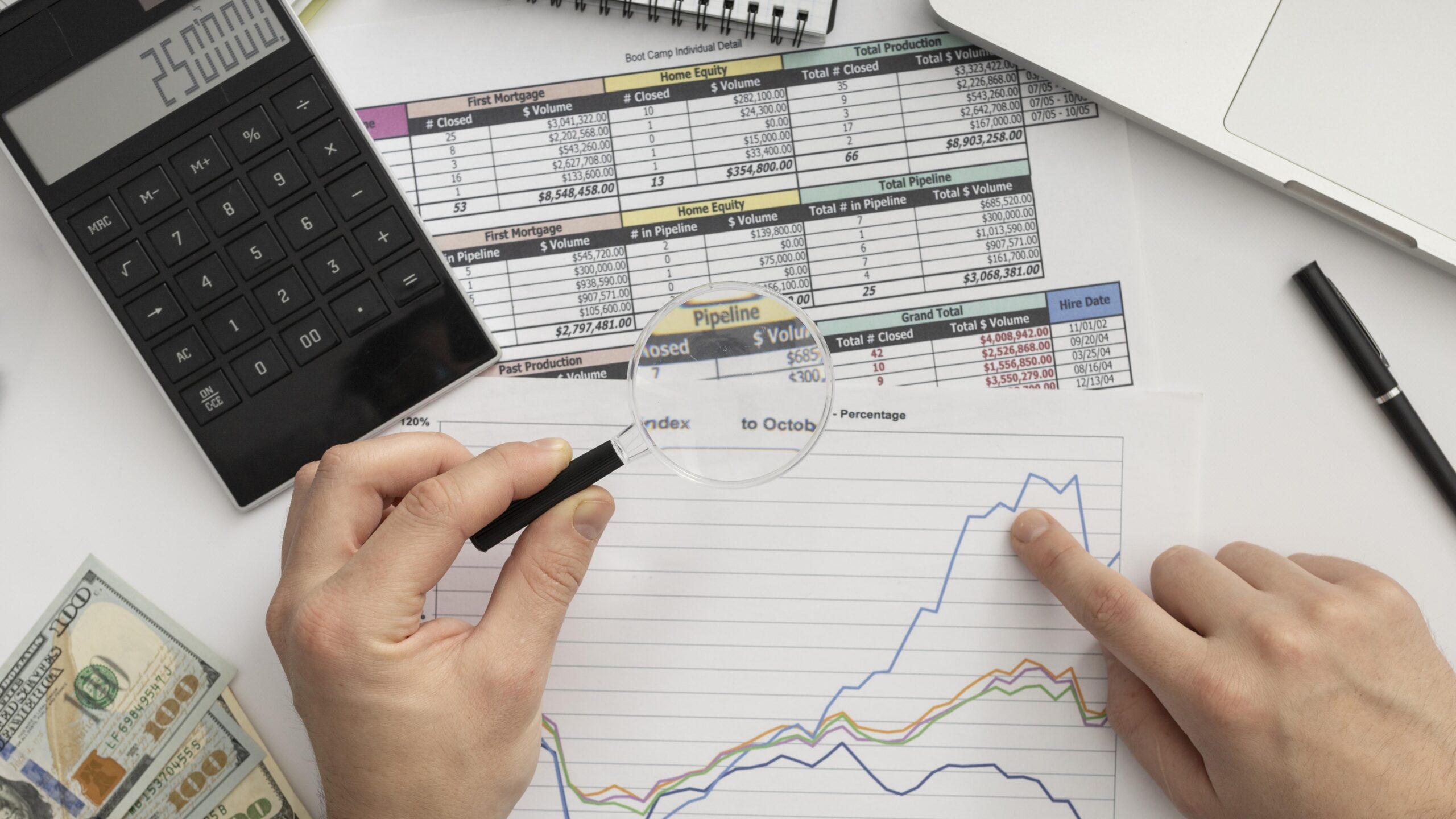
Forecasting : From Simple Budgets to Advanced Cash Forecasting
In a volatile economic environment, a static business budget is not enough; we need dynamic cash forecasting that is grounded in reality. A rolling cash flow forecast—often built over 13 weeks—allows us to map expected cash inflows from revenue streams against planned cash outflows such as payroll, rent, vendor invoices, and loan repayments. By feeding in current data about the inflation rate, recent supplier price changes, and updated staffing plans, we can stress-test our liquidity and identify periods where funds may run short. This form of proactive cashflow management turns guesswork into measured business decisions, supported by real numbers.
We also enhance our forecasts with structured scenario planning. We model different paths: a base case where prices stabilise, an adverse case with higher specific inflation in energy or raw materials, and a more optimistic case with easing cost pressures. Using these scenarios, we can test how sensitive our operating ratio and line of credit utilisation are to changes in interest rates and demand. Proper management information and timely management reports give us the financial visibility to act early—whether that means tightening cost-cutting measures, renegotiating contracts and terms, or reconsidering capital projects using robust investment appraisal methods such as net present value that adjust for inflation, straight-line tax-allowable depreciation, corporation tax, and the true real cost of capital.
Tightening Cost Control Without Sacrificing Value
During inflation, cutting costs is inevitable, but it must be done intelligently. Instead of blunt cuts, we start by examining our fixed costs and variable costs separately, along with their impact on our operating ratio. We review recurring expenses such as rent, utilities, subscriptions, and insurance, and we ask where cost-cutting measures can reduce cash outflows without damaging our ability to generate revenue. This may include optimising energy use, automating simple processes with advanced technology, or consolidating suppliers to gain better terms on raw materials and services. The target is not simply to spend less, but to spend more efficiently.
At the same time, we continually review our selling price and product mix. Focusing on high-margin products that are less price-sensitive can help stabilise profits while reducing the volume of goods needed to hit revenue goals, which in turn eases pressure on inventory management. We look for leaner ways to operate across our supply chain, from procurement to logistics, paying attention to how asset-based carriers, a diversified carrier network, or a flexible transportation provider can mitigate freight cycles and cost spikes. Tools like a lane profitability framework help us identify where logistics routes or product lines destroy value and where they produce the strongest returns, guiding us toward smarter resource allocation.

Strengthening Pricing Strategies and Revenue Streams
In inflationary times, we cannot protect cash flow without revisiting our pricing strategies. Simply absorbing rising raw material costs is rarely sustainable. Instead, we plan incremental price adjustments that reflect both increased input costs and market expectations. We also segment customers and products, allowing us to prioritise price changes where demand is strong and value is clear, while being more cautious in highly competitive segments. By clearly communicating the reasons for these adjustments—linking them to the Consumer Price Index, supplier price movements, or wage increases—we maintain trust while protecting margins.
We also broaden and stabilise our revenue streams wherever possible. Adding recurring models such as subscriptions, retainers, or maintenance contracts can smooth cash inflows and reduce our exposure to sudden demand swings. At the same time, we monitor market trends and opportunities in international trade and the wider international business community, seeking regions or segments where post-pandemic demand remains robust. Strong business relationships with customers and partners help us co-design solutions that balance price, volume, and service levels, allowing both sides to navigate inflation together and preserve long-term value.
Managing Receivables, Payables, and Working Capital
In periods of economic instability, a sale only matters when it converts into cash. That is why disciplined management of accounts receivable is essential to effective cash flow management. We review payment terms for new and existing customers, tightening where necessary, and design credit policies that consider payment history, sector risk, and customer size. Offering early pay discounts can accelerate customer payments and improve liquidity, especially when the discount is smaller than the cost of borrowing. Where collection is consistently slow, we may consider accounts receivable factoring to convert outstanding invoices into immediate cash inflows, accepting a fee in exchange for greater stability.
On the payables side, we handle vendor invoices strategically, negotiating contracts and terms that align due dates with our expected cash inflows. Extending payment terms in a fair and transparent way can ease short-term pressure, though we must weigh this against potential early-payment rebates and the importance of maintaining strong supplier relationships. Effective inventory management also plays a key role. Holding too much stock in raw materials or finished goods ties up cash and heightens the risk of obsolescence, especially when product lifecycles shorten due to rapid changes in demand. By analysing turnover, safety stock, and lead times—and by adapting to supply chain disruptions—we keep inventory lean while staying responsive to customers.

Financing, Debt Management, and Risk Management
Financing decisions become more complex when the Federal Reserve and other central banks raise interest rates, so we must approach debt management with care. Reviewing each loan’s terms, debt covenants, and interest structure helps us understand how interest rate hikes will affect future cash outflows. Where possible, we may renegotiate to lock in reasonable fixed rates, extend maturities, or consolidate smaller facilities into a more efficient line of credit. The goal is to reduce refinancing risk and secure access to liquidity without over-leveraging the business.
Good risk management also relies on choosing financing structures that align with the lifespans of the assets or initiatives they support. When performing investment appraisal, we compare the net present value of projects under different inflation and rate scenarios, adjusting for corporation tax, depreciation methods like straight-line tax-allowable depreciation, and both real cost of capital and nominal cost of capital. This level of rigour prevents us from pursuing growth initiatives that appear attractive in nominal values but destroy value once inflation and funding costs are properly considered. Through robust analysis and clear management reports, we maintain the financial visibility needed to steer the business safely through volatility.
Leveraging Technology, Data, and Market Insight
Modern cashflow management benefits greatly from advanced technology and high-quality data. Cloud-based tools and analytics platforms aggregate management information from sales, operations, logistics, and finance, giving us near real-time insight into cash flow, profitability, and performance against budget. Automated alerts highlight anomalies such as sudden spikes in raw material costs, deteriorating collection patterns in accounts receivable, or divergence between projected and actual cash inflows. With this visibility, we can respond faster, adjust pricing strategies, and fine-tune cost-cutting measures before minor issues escalate.
We also pay attention to broader market trends and signals from the international business community, including shipping costs, port congestion, and capacity changes among asset-based carriers and other members of our carrier network. Understanding how freight cycles evolve and how each route performs within a lane profitability framework enables us to select the right transportation provider for each corridor and anticipate future cost changes. Combining external intelligence with internal data turns economic uncertainty into a manageable set of risks, enabling informed business decisions that help us stay one step ahead rather than constantly react.

Building Lasting Resilience in Inflationary Times
While our immediate focus is to protect liquidity in inflationary times, the disciplines we build now can strengthen our business long after inflation moderates. Rigorous cash flow management, thoughtful cash forecasting, disciplined inventory management, and data-driven pricing strategies all contribute to an organisation that can adapt quickly to changing global economic conditions. Over time, we evolve from reacting to crises toward managing a portfolio of risks and opportunities with steady, informed leadership.
By aligning our teams around clear metrics, strong business relationships, and robust processes, we build a company that can withstand economic instability and still pursue growth. Whether we are renegotiating contracts and terms, refining our product mix, exploring new markets, or optimising our finance structure, we keep one principle at the centre: every decision should enhance long-term health, not just short-term numbers. In doing so, we ensure that our cash flow remains a powerful engine for sustainable progress, even when inflation and uncertainty seem here to stay.